
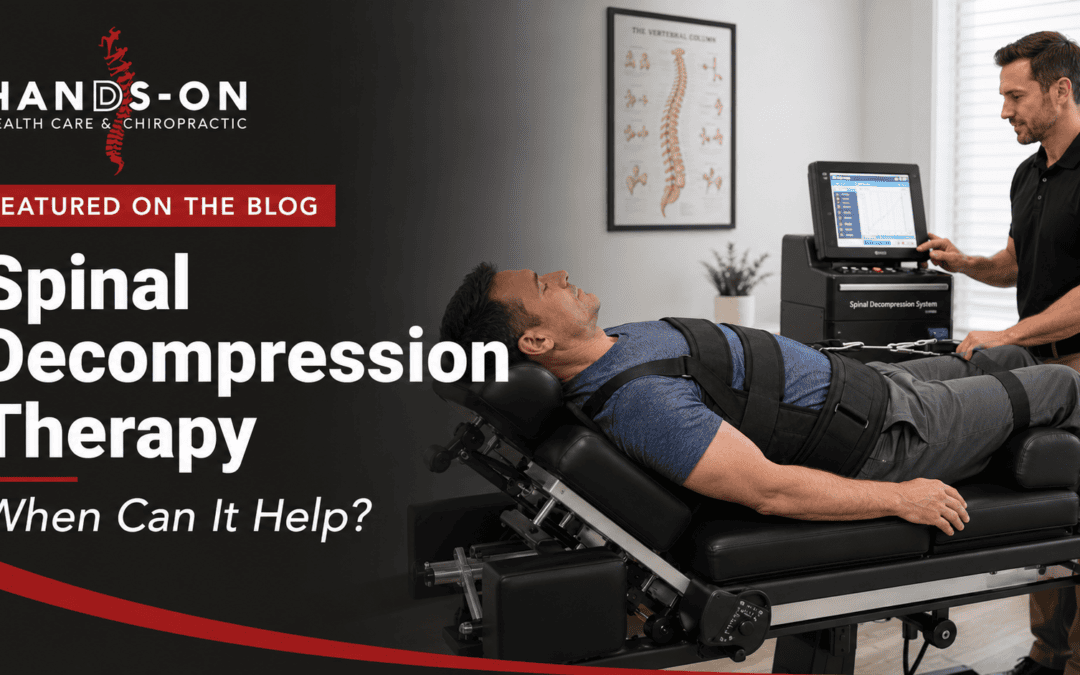
Spinal decompression therapy is a non-surgical treatment option that may help some patients dealing with back pain, neck pain, disc-related discomfort, nerve pressure, or pain that affects daily movement.
When pain keeps coming back, travels into the hip or leg, or feels connected to a disc or nerve concern, it can be difficult to know what type of care may be appropriate. That is why an evaluation is important before starting any treatment plan.
At Hands-On Health Care & Chiropractic, patients in Tarpon Springs and New Port Richey can ask about spinal decompression therapy as part of a personalized approach to pain, movement, and wellness.
Quick Answer: What Is Spinal Decompression Therapy?
Spinal decompression therapy is a non-surgical treatment that uses controlled traction to gently stretch the spine. The goal is to help reduce pressure on spinal discs and nerves. It may be considered for some patients with back pain, neck pain, disc-related discomfort, sciatica-like symptoms, or nerve irritation, depending on their evaluation and health history.
Quick Takeaways
- Spinal decompression therapy is designed to gently stretch the spine using controlled traction.
- It may be discussed for certain types of back pain, neck pain, disc discomfort, or nerve-related symptoms.
- Symptoms such as pain traveling into the hip, leg, arm, or shoulder may need evaluation.
- Spinal decompression is not the right option for every patient, which is why a proper evaluation matters.
- Hands-On Health Care & Chiropractic offers spinal decompression therapy in Tarpon Springs and New Port Richey.
What Is Spinal Decompression Therapy?
Spinal decompression therapy is a non-surgical spinal treatment that uses a specialized table to gently stretch and relax the spine. This controlled stretching may help create space around compressed discs and irritated nerves.
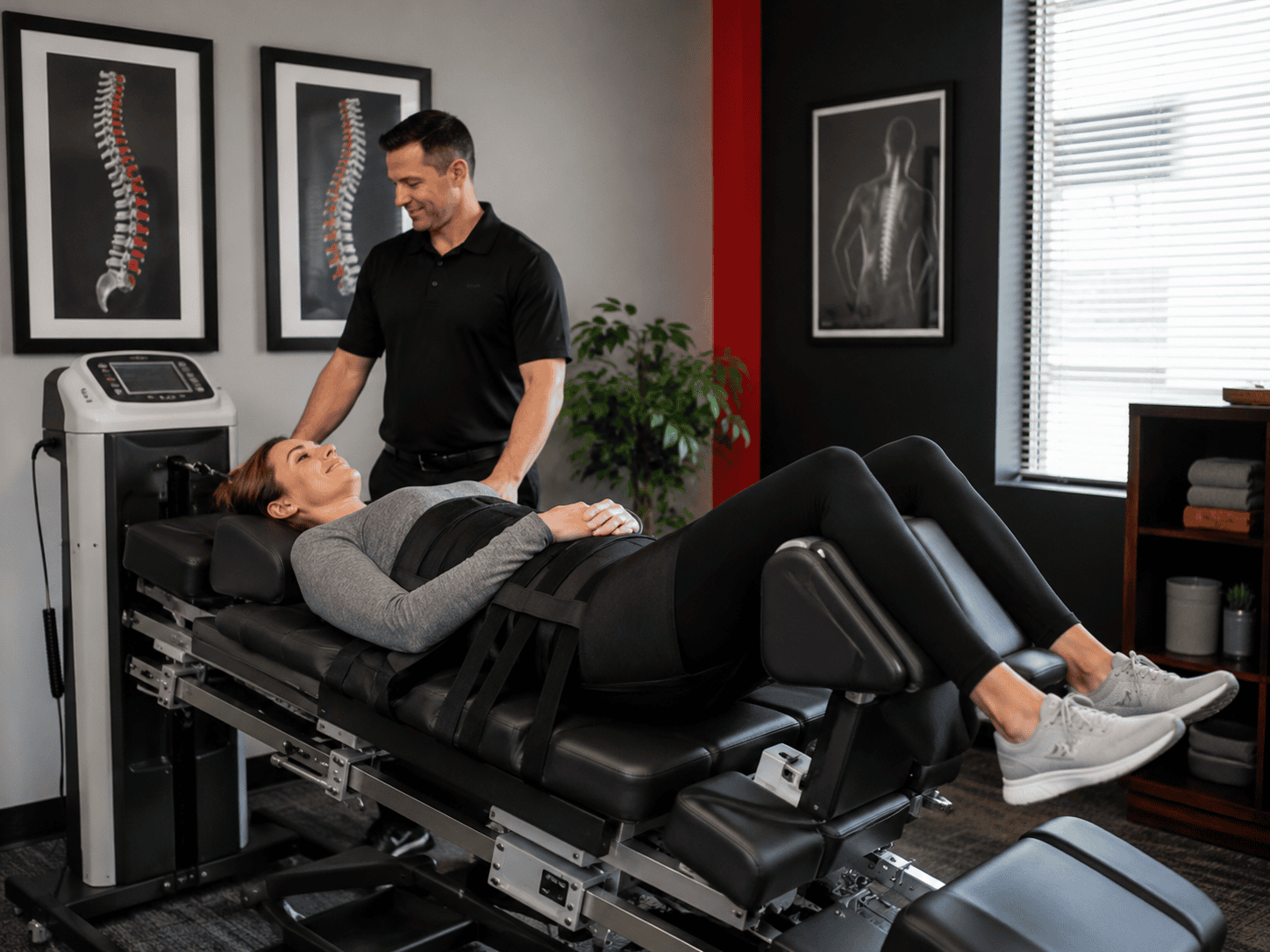
Spinal decompression therapy uses controlled traction to gently stretch the spine.
According to Hands-On Health Care & Chiropractic’s Spinal Decompression service page, this therapy is a non-surgical spinal rehabilitation program that gently stretches and lengthens the spine to help decompress an injured disc.
For general educational context, Cleveland Clinic describes nonsurgical spinal decompression as a type of traction that may use a traction table to stretch the spine.
When Can Spinal Decompression Therapy Help?
Spinal decompression therapy may be considered when symptoms suggest that spinal discs, nerves, or surrounding structures may be contributing to pain or limited movement.
Patients may ask about spinal decompression therapy if they are dealing with:
- Lower back pain
- Neck pain
- Disc-related discomfort
- Pain that travels into the hip, leg, shoulder, or arm
- Sciatica-like symptoms
- Numbness or tingling
- Recurring stiffness or limited mobility
- Pain that has not improved with basic self-care
Because back and neck pain can have many causes, spinal decompression should only be considered after a provider reviews your symptoms, health history, movement, and any relevant imaging or prior diagnosis.
How Does Spinal Decompression Therapy Work?
During spinal decompression therapy, the patient lies on a specialized treatment table while controlled traction is applied. The table gently stretches the spine in a way that is designed to reduce pressure in targeted areas.
The goal is not to force movement. Instead, the treatment is designed to create a controlled, comfortable stretching motion that may help reduce stress on discs, joints, and nerves.
A patient’s care plan depends on the evaluation findings, symptoms, comfort level, and treatment goals. Some patients may also benefit from other supportive services such as pain treatment, massage therapy, chiropractic care, or other therapies offered by the practice.
Who May Be a Good Candidate for Spinal Decompression Therapy?
A good candidate for spinal decompression therapy may be someone with back pain, neck pain, disc-related discomfort, or nerve-type symptoms who has been evaluated by a qualified provider.
Spinal decompression may be worth asking about if you have:
- Pain that keeps returning
- Back or neck pain that affects daily activity
- Disc-related concerns
- Pain that travels into the leg or arm
- Numbness, tingling, or nerve-type discomfort
- Limited movement that has not improved with basic self-care
Spinal decompression may not be appropriate for every condition. That is why patients should be evaluated before starting care, especially if symptoms are severe, worsening, or connected to a recent injury.
Common Mistakes People Make With Back or Neck Pain
Mistake 1: Waiting Too Long to Get Evaluated
Some people wait until pain becomes severe or starts affecting sleep, work, driving, or daily activity. Getting evaluated earlier may help patients better understand what is causing their symptoms.
Mistake 2: Assuming All Back Pain Is the Same
Muscle soreness, joint stiffness, disc discomfort, and nerve irritation can feel different and may require different care considerations.
Mistake 3: Ignoring Radiating Pain, Numbness, or Tingling
Pain that travels into the leg, foot, shoulder, or arm should not be ignored, especially if it comes with numbness, tingling, weakness, or worsening symptoms.
Key Considerations for Spinal Decompression Therapy
If your back or neck pain keeps returning, do not only focus on where the pain is. Pay attention to whether it travels, causes numbness or tingling, affects your movement, or changes with sitting, standing, bending, or sleeping. Those details can help guide your evaluation.
When Should Symptoms Be Evaluated?
You should consider scheduling an evaluation if back pain, neck pain, or nerve-type symptoms:
- Do not improve
- Keep coming back
- Travel into the hip, leg, foot, shoulder, or arm
- Come with numbness, tingling, or weakness
- Limit walking, standing, sitting, sleeping, working, or exercising
- Started after an accident, fall, or sudden injury
- Are getting worse over time
Seek urgent medical attention if symptoms include severe pain after trauma, new bowel or bladder problems, significant weakness, numbness, trouble walking, or other urgent symptoms.
How Hands-On Health Care & Chiropractic Can Help
Hands-On Health Care & Chiropractic provides care for patients dealing with back pain, neck pain, disc-related discomfort, nerve-type symptoms, chronic pain, auto injuries, sports injuries, and movement-related concerns.
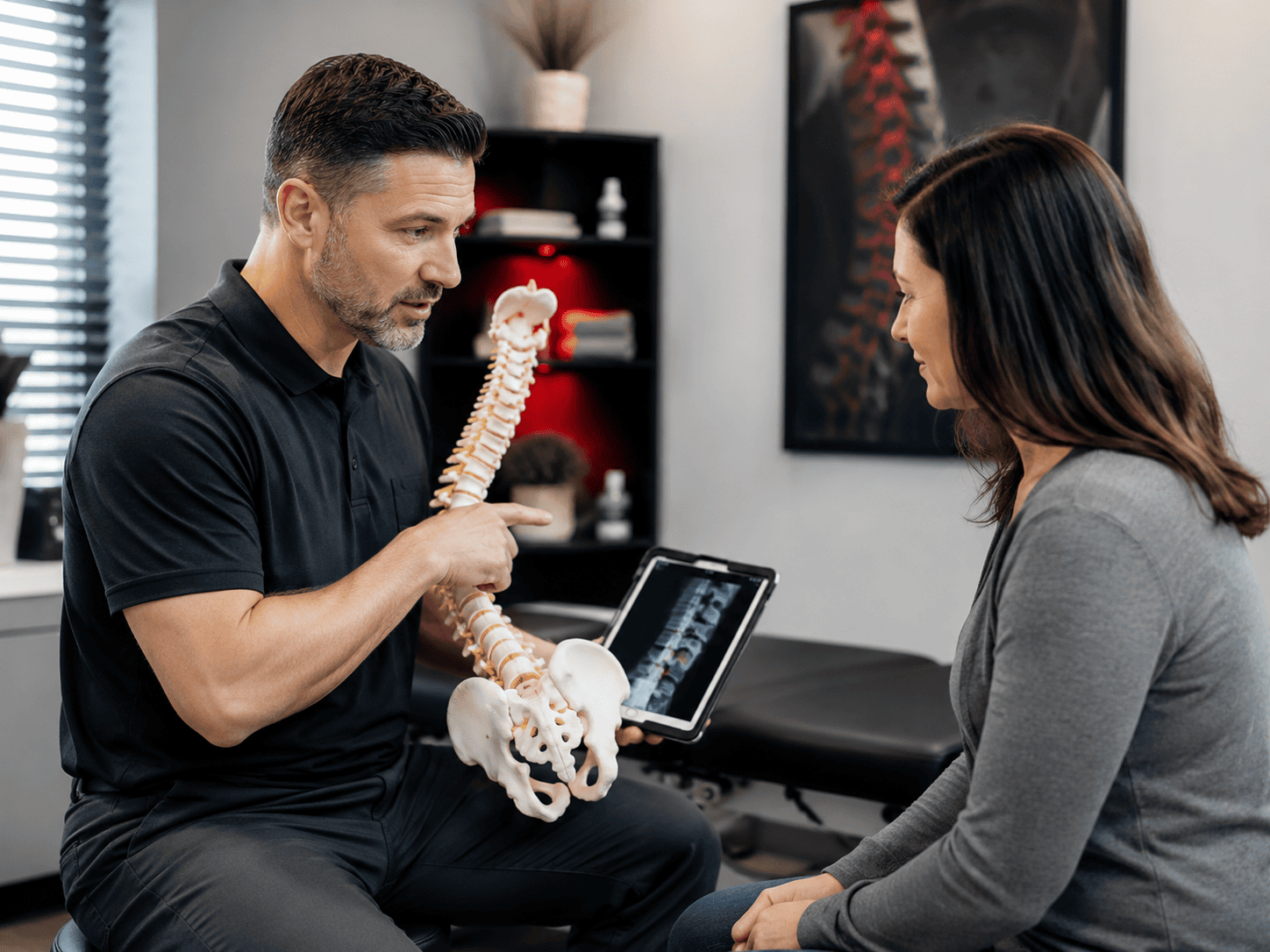
An evaluation can help determine whether spinal decompression therapy or another care option may be appropriate.
Depending on your symptoms and evaluation, care may include spinal decompression therapy, chiropractic care, pain treatment, massage therapy, Class IV laser therapy, shockwave therapy, or other supportive services offered through the practice.
The goal is to help patients better understand their symptoms, support healthier movement where possible, and take the next step toward care that fits their needs.
Hands-On Health Care & Chiropractic has two convenient locations:
- Tarpon Springs — (727) 937-6740
- New Port Richey — (727) 992-9969
FAQ: Spinal Decompression Therapy
What is spinal decompression therapy?
Spinal decompression therapy is a non-surgical treatment that uses controlled traction to gently stretch the spine. It may help reduce pressure around spinal discs and nerves for some patients.
Can spinal decompression therapy help back pain?
Spinal decompression therapy may be considered for certain types of back pain, especially when disc-related discomfort, nerve pressure, or pain that travels into the leg may be involved. An evaluation is needed to determine whether it may be appropriate.
Can spinal decompression therapy help neck pain?
Spinal decompression therapy may also be discussed for certain neck pain concerns, especially when symptoms may involve disc irritation, nerve pressure, or pain that travels into the shoulder or arm.
How long does spinal decompression therapy take?
Treatment timing depends on the patient’s symptoms, evaluation, and care plan. Hands-On Health Care & Chiropractic’s service page notes that spinal decompression sessions may last 10 to 20 minutes over a recommended care period.
When should I ask about spinal decompression therapy?
You may want to ask about spinal decompression therapy if you have back pain, neck pain, disc-related discomfort, pain that travels into the leg or arm, numbness, tingling, or symptoms that keep returning despite basic self-care.
Ask About Spinal Decompression Therapy
If you are dealing with back pain, neck pain, disc-related discomfort, or nerve-type symptoms, an evaluation can help determine what care options may be appropriate.
Schedule an appointment with Hands-On Health Care & Chiropractic in Tarpon Springs or New Port Richey and ask whether spinal decompression therapy may be right for your symptoms.
Tarpon Springs — 1883 South Pinellas Avenue, Tarpon Springs, FL 34689 — (727) 937-6740
New Port Richey — 9782 Little Rd, New Port Richey, FL 34654 — (727) 992-9969